

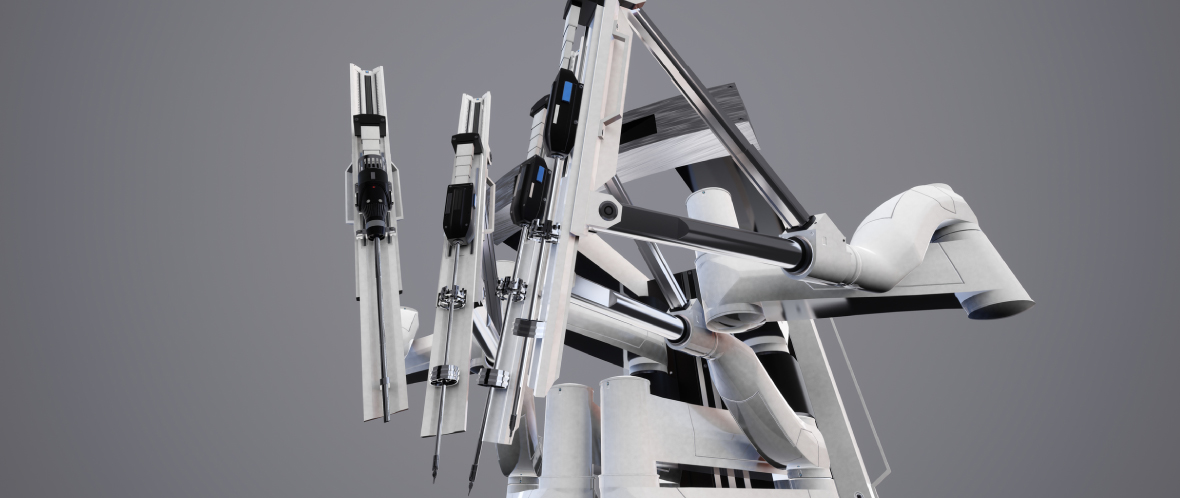
Medical technology is advancing rapidly, and the introduction of robotic-assisted surgery systems at PYNEH has brought significant changes has brought significant changes for colon cancer patients. The surgical incision is only 7 mm, allowing patients to recover faster, reducing hospital stay time, and lowering medical costs. How does this new technology change medical services and bring hope for colon cancer patients to regain a healthy life?
New Breakthrough in Robotics: Minimally Invasive Surgery
Traditional colon cancer surgeries often involve large incisions, lengthy hospital stays, and extended recovery periods. However, PYNEH's robotic-assisted surgery system has revolutionized this approach. By utilizing advanced robotic arm technology, doctors can now perform surgeries with greater precision. Compared to traditional minimally invasive surgery, this technology reduces incisions to as small as 7 mm, enhancing surgical stability and significantly shortening hospital stays. This innovative method not only improves patient outcomes but also transforms the surgical experience by providing more precise and efficient procedures.
How Do Robots Support Colorectal Cancer Patients?
Robotic systems do not replace doctors but rather assist them. By utilizing high-definition 3D imaging and flexible robotic arms, surgeons can achieve greater precision and stability than is possible with human hands and eyes alone. This technology is particularly beneficial for patients undergoing colon cancer tumor removal, as it reduces bleeding, minimizes incisions, and preserves healthy tissue around the tumor more effectively. This not only improves surgical outcomes but also enhances patient recovery by reducing complications and promoting faster healing.
In contrast to traditional surgeries, which often involve incisions over 10 cm, the minimally invasive colon cancer surgery at PYNEH can be completed with a remarkably small incision of just 7 mm. This results in scars that are almost imperceptible and significantly reduces postoperative pain. The medical team emphasizes that this technology is particularly beneficial for early-stage colon cancer patients, enabling them to recover more quickly and return to their normal lives sooner.
Shortened Hospital Stays for a Faster Return to Life
Typically, traditional colon cancer surgeries require patients to stay in the hospital for about two weeks. However, with the introduction of robotic-assisted systems, this hospital stay has been significantly shortened. According to data from Eastern District Hospital, patients using this technology have an average hospital stay reduced to 8 to 10 days. This not only alleviates the physical burden on patients but also helps relieve the pressure on public hospital beds, achieving multiple benefits at once.
The Future of Robotic Medical Technology
As noted by the Hong Kong Cancer Registry, colon cancer remains a prevalent cancer in Hong Kong, indicating a growing need for advanced treatments. Robotic surgery has not only improved treatment efficacy but also boosted patient confidence in managing their conditions. With the increasing adoption and advancement of this technology, its applications are expected to broaden, providing more diverse medical options and making the recovery process smoother. This trend aligns with global developments, where robotic-assisted surgeries are recognized for their precision and safety, offering promising outcomes for cancer patients.